ASME B16.9 SCH 80 Buttweld Stainless Steel Pipe End Cap need to choose high-quality stainless steel materials to ensure the performance and service life of the pipe end caps. Stainless steel materials such as 304 and 316L are usually used. These materials have excellent corrosion resistance, toughness and plasticity, and are easy to process.
The materials required for stainless steel pipe end caps include not only stainless steel blanks, but also various auxiliary materials, such as grinding wheels, pickling solutions, etc. When selecting materials, comprehensive considerations need to be made based on specific requirements to ensure the quality of stainless steel pipe end caps.
Choosing the right material has a critical impact on the quality and service life of stainless steel pipe end caps.
The process of stainless steel pipe end caps requires multiple processes, including blanking, cutting, forming, polishing, etc. The main process of stainless steel pipe end caps will be introduced below.
1. Unloading
The stainless steel blanks are cut according to the required shape and size, usually using a shearing machine or flame cutting machine. During the blanking process, attention must be paid to maintaining the flatness and accuracy of the plate to facilitate subsequent processes.
2. Forming
The blanked stainless steel plate is formed. According to the different shapes of the pipe end caps, different forming methods such as mold pressing and bending can be selected. The molding process requires strict control of heating temperature and time to avoid deformation and cracks.
3. Polishing
The formed stainless steel pipe end cap is polished to improve the appearance quality and brightness and enhance its corrosion resistance. Polishing requires professional equipment and processes to achieve the desired results.
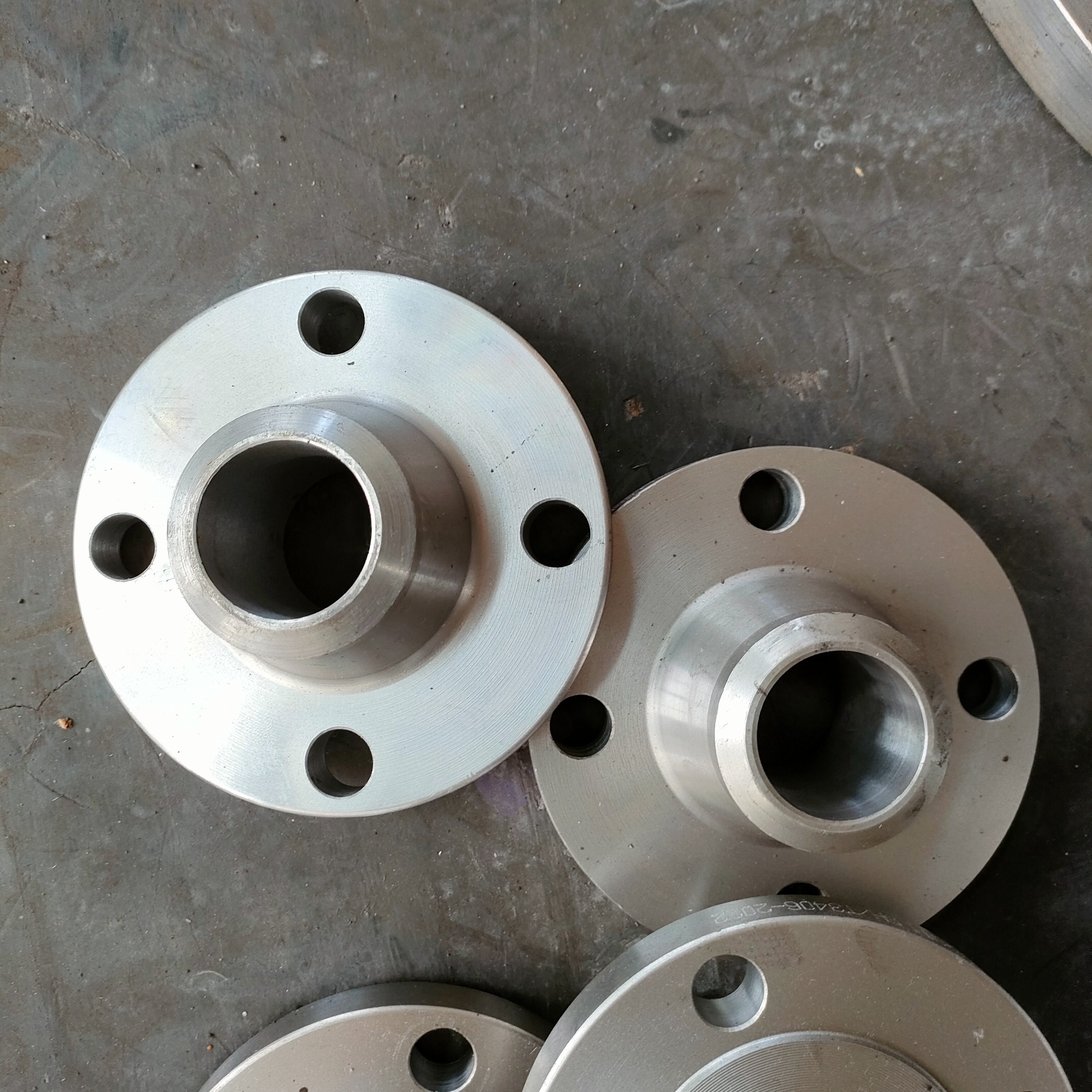 DIN 2632 PN10 Welding Neck/WN Flange Dimensions
 API 605/ASME B16.47 Series B Steel Flanges NPS 26 Through NPS 60
 ASME B16.5 Threaded Flange Dimensions (150lb-2500lb)
 ASME B16.5 Lap Joint Flange Dimensions (150lb-2500lb)